WordPress powers over 40% of all websites. It's flexible, well-known and has a massive ecosystem. But it's not always the right choice — and it's not always the wrong one either.
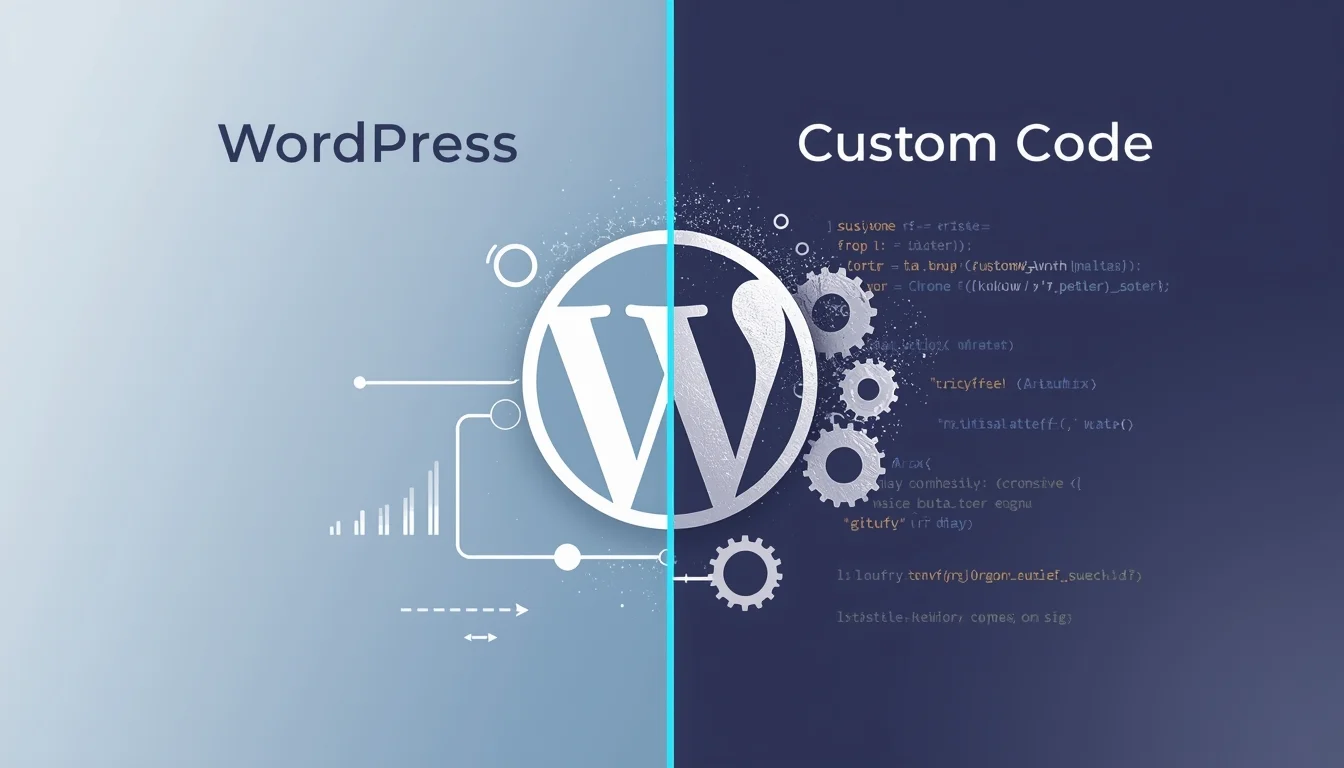
In this article, we make an honest comparison between WordPress and custom-built systems. Not to sell one over the other, but to help you make the right decision for your specific situation.
When WordPress is enough — and enough is good
WordPress is an excellent choice in several scenarios:
- Simpler websites — company sites, portfolios and blogs where content is most important
- Limited budget — you get started quickly with ready-made themes and plugins
- Internal content work — editors who need to update text and images themselves
- Short timelines — a working site in days instead of weeks
With the right configuration, a well-chosen theme and a limited number of plugins, WordPress can deliver a fast, secure site. The key is discipline — not installing 40 plugins to solve problems that really require 10 lines of code.
Where WordPress starts costing more than it's worth
Problems arise when requirements grow:
Plugin dependency
A typical WordPress site with e-commerce runs 30–60 plugins. Each plugin is an external codebase you don't control. In our analysis of five e-commerce platforms, we found 622,089 identified errors in the WooCommerce codebase. That's not an argument against WordPress itself — but it shows what happens when complexity spirals.
Performance
WordPress loads its framework on every page view. With enough plugins, hooks and database queries, the site gets slow — and you compensate with caching plugins that add even more complexity.
Security
WordPress is the world's most attacked CMS — not because it's inherently insecure, but because it's the biggest target. Every plugin that isn't updated is a potential entry point.
Technical debt
As we described in our article on technical debt: every dependency you add accumulates debt. WordPress sites with many plugins build up technical debt that sooner or later must be paid — in the form of upgrade problems, incompatibilities and security risks.
When custom development pays off
Custom development provides the most value when:
- Unique business processes — the system should mirror how you actually work, not the other way around
- High traffic or large data volumes — you need full control over performance
- Regulatory requirements — for example KYC, GDPR or industry-specific regulations
- Long-term investment — you want a system that lasts 10+ years without rewriting
- Programmatic SEO — thousands of pages generated from data, where WordPress architecture becomes a bottleneck
A custom system in clean PHP, HTML and CSS has zero external dependencies. No plugin that stops being maintained, no framework requiring major upgrades, no attack surface beyond your own code.
The third alternative: optimize what you have
You don't always have to switch platforms. In many cases, an existing WordPress site can be significantly improved:
- Plugin cleanup — replace 10 plugins with 50 lines of custom code
- Theme optimization — remove bloat and only load what's needed
- Database optimization — clean transients, optimize queries, add proper indexes
- Security hardening — disable XML-RPC, limit login attempts, configure headers
It's not about WordPress being bad — it's about using it right. A WordPress site with 5 well-chosen plugins and clean code is a completely different thing than one with 50 random add-ons.
Comparison in numbers
| Aspect | WordPress (typical) | Custom-built |
|---|---|---|
| Codebase | 500,000+ lines (with plugins) | 2,000–10,000 lines |
| External dependencies | 30–60 plugins | 0 |
| Loading time | 1.5–4 seconds | 0.2–0.8 seconds |
| Attack surface | WordPress core + all plugins | Own code only |
| Maintenance cost | Ongoing plugin updates | Minimal |
| Flexibility | Limited by plugin architecture | Total |
Summary
There is no universal answer. WordPress is right for many — but not for everyone. Custom development is right for some — but not for every small site.
What matters is understanding what you actually need, what requirements you have today and what you'll have in three years. Sometimes the answer is a new platform. Sometimes the answer is optimizing the one you already have.
Want to know what suits your business best? Contact us for a free review — we'll help you whether the answer is WordPress, custom-built or something in between.